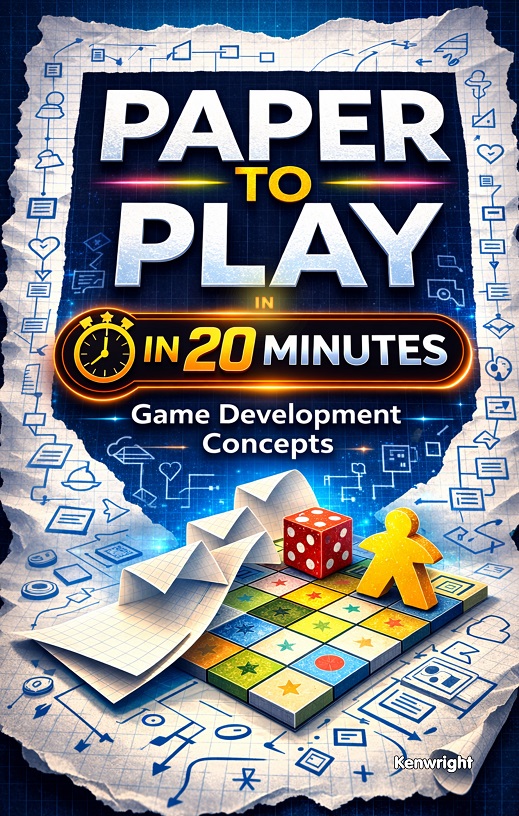
Quick Facts
- ISBN: 9798251166163
- Published: 2026
- Pages: 304
- Language: English
- Categories: Game Development, Game Design, Rapid Prototyping, Game Mechanics, Indie Game Development, Creative Design
About This Book
The visual elements in this book - charts, diagrams, and infographics - are not just decorative but deeply informative. They serve as effective tools for reinforcing key concepts in Game Prototyping, Rapid Game Development, Game Design, Paper Prototyping, Game Mechanics, Indie Game Development, Creative Thinking, Game Jams, Iterative Design, Game Concepts and enhancing the overall learning experience. Practical applications are a key focus throughout the book. Each chapter on Game Prototyping, Rapid Game Development, Game Design, Paper Prototyping, Game Mechanics, Indie Game Development, Creative Thinking, Game Jams, Iterative Design, Game Concepts includes real-world examples, case studies, and exercises that help readers apply what they've learned to their own Game Prototyping and Rapid Game Development and Game Design and Paper Prototyping and Game Mechanics and Indie Game Development and Creative Thinking and Game Jams and Iterative Design and Game Concepts projects or research. The accessibility of this book makes it an excellent choice for self-study. Paper to Play in 20 Minutes's clear explanations and logical progression through Game Prototyping, Rapid Game Development, Game Design, Paper Prototyping, Game Mechanics, Indie Game Development, Creative Thinking, Game Jams, Iterative Design, Game Concepts ensure that readers can follow along without feeling overwhelmed, regardless of their prior experience in Game Prototyping and Rapid Game Development and Game Design and Paper Prototyping and Game Mechanics and Indie Game Development and Creative Thinking and Game Jams and Iterative Design and Game Concepts. One of the most impressive aspects of this Game Prototyping and Rapid Game Development and Game Design and Paper Prototyping and Game Mechanics and Indie Game Development and Creative Thinking and Game Jams and Iterative Design and Game Concepts book is how Paper to Play in 20 Minutes integrates historical context into the discussion of Game Prototyping, Rapid Game Development, Game Design, Paper Prototyping, Game Mechanics, Indie Game Development, Creative Thinking, Game Jams, Iterative Design, Game Concepts. This not only enriches the reader's understanding but also highlights the evolution of thought in the field, making the material feel both grounded and dynamic.
Key Features
- Glossary of key terms
- Visual timelines or process flows
- Chapter summaries for quick revision
- Exercises and review questions
- Cross-references to related concepts
- Comprehensive coverage of Game Prototyping, Rapid Game Development, Game Design
- Self-assessment checklists
- Annotated bibliographies for deeper exploration
About the Author
Paper to Play in 20 Minutes
As a leading authority on Game Development, Paper to Play in 20 Minutes brings a unique perspective to Game Prototyping, Rapid Game Development, Game Design. They have taught at several prestigious universities and consulted for major organizations worldwide.
Related News & Articles
Why a Woman Would Rather Love a Statue Than a Man
Apr 03, 2026In “When the Museum Is Closed,” Emi Yagi takes her study of female objectification to a new, literal extreme.
www.newyorker.comThe Timeless Provocations of “Wuthering Heights” (the Novel)
Apr 02, 2026A great fuss surrounds Emerald Fennell’s anachronistic adaptation, but Emily Brontë’s ruthless text will always have the last word.
www.newyorker.comThe Hidden History of Native American Enslavement
Mar 21, 2026Indigenous slavery, which lasted for centuries, has gone by many names. A new public history project wants us to see it for what it was.
www.newyorker.comThe Unlikely Success of a Strange Alabama Bookstore
Apr 02, 2026Jake Reiss only sells signed books, and mostly at publisher’s prices. It shouldn’t work, but it has.
www.newyorker.comThe End of Books Coverage at the Washington Post
Apr 13, 2026What the closing of the Washington Post’s books section means for readers.
www.newyorker.comReader Reviews

Thomas Jackson
A Masterful Treatment of the Subject
Rarely do I come across a book that feels both intellectually rigorous and deeply human. Paper to Play in 20 Minutes's treatment of Game Prototyping, Rapid Game Development, Game Design, Paper Prototyping, Game Mechanics, Indie Game Development, Creative Thinking, Game Jams, Iterative Design, Game Concepts is grounded in empathy and experience. The chapter on Creative Thinking left a lasting impression, and I've already begun applying its lessons in my classroom. As someone with 5 years of experience in Game Prototyping and Rapid Game Development and Game Design and Paper Prototyping and Game Mechanics and Indie Game Development and Creative Thinking and Game Jams and Iterative Design and Game Concepts, I found this book to be an exceptional resource on Game Prototyping, Rapid Game Development, Game Design, Paper Prototyping, Game Mechanics, Indie Game Development, Creative Thinking, Game Jams, Iterative Design, Game Concepts. Paper to Play in 20 Minutes presents the material in a way that's accessible to beginners yet still valuable for experts. The chapter on Game Prototyping was particularly enlightening, offering practical applications I hadn't encountered elsewhere.

Jennifer Taylor
An Instant Favorite on My Bookshelf
This isn't just another book on Game Prototyping, Rapid Game Development, Game Design, Paper Prototyping, Game Mechanics, Indie Game Development, Creative Thinking, Game Jams, Iterative Design, Game Concepts - it's a toolkit. As someone who's spent 4 years navigating the ins and outs of Game Prototyping and Rapid Game Development and Game Design and Paper Prototyping and Game Mechanics and Indie Game Development and Creative Thinking and Game Jams and Iterative Design and Game Concepts, I appreciated the actionable frameworks and real-world examples. Paper to Play in 20 Minutes doesn't just inform; they empower. I approached this book as someone relatively new to Game Prototyping and Rapid Game Development and Game Design and Paper Prototyping and Game Mechanics and Indie Game Development and Creative Thinking and Game Jams and Iterative Design and Game Concepts, and I was pleasantly surprised by how quickly I grasped the concepts around Game Prototyping, Rapid Game Development, Game Design, Paper Prototyping, Game Mechanics, Indie Game Development, Creative Thinking, Game Jams, Iterative Design, Game Concepts. Paper to Play in 20 Minutes has a gift for explaining complex ideas clearly without oversimplifying. The exercises at the end of each chapter were invaluable for reinforcing the material. It's rare to find a book that serves both as an introduction and a reference work, but this one does so admirably. From the moment I started reading, I could tell this book was different. With over 5 years immersed in Game Prototyping and Rapid Game Development and Game Design and Paper Prototyping and Game Mechanics and Indie Game Development and Creative Thinking and Game Jams and Iterative Design and Game Concepts, I've seen my fair share of texts on Game Prototyping, Rapid Game Development, Game Design, Paper Prototyping, Game Mechanics, Indie Game Development, Creative Thinking, Game Jams, Iterative Design, Game Concepts, but Paper to Play in 20 Minutes's approach is refreshingly original. The discussion on Game Jams challenged my assumptions and offered a new lens through which to view the subject.

Richard Thompson
The Most Useful Book I've Read This Year
Having read numerous books on Game Prototyping and Rapid Game Development and Game Design and Paper Prototyping and Game Mechanics and Indie Game Development and Creative Thinking and Game Jams and Iterative Design and Game Concepts, I can confidently say this is among the best treatments of Game Prototyping, Rapid Game Development, Game Design, Paper Prototyping, Game Mechanics, Indie Game Development, Creative Thinking, Game Jams, Iterative Design, Game Concepts available. Paper to Play in 20 Minutes's unique perspective comes from their 18 years of hands-on experience, which shines through in every chapter. The section on Paper Prototyping alone is worth the price of admission, offering insights I haven't seen elsewhere in the literature. As someone with 5 years of experience in Game Prototyping and Rapid Game Development and Game Design and Paper Prototyping and Game Mechanics and Indie Game Development and Creative Thinking and Game Jams and Iterative Design and Game Concepts, I found this book to be an exceptional resource on Game Prototyping, Rapid Game Development, Game Design, Paper Prototyping, Game Mechanics, Indie Game Development, Creative Thinking, Game Jams, Iterative Design, Game Concepts. Paper to Play in 20 Minutes presents the material in a way that's accessible to beginners yet still valuable for experts. The chapter on Game Mechanics was particularly enlightening, offering practical applications I hadn't encountered elsewhere. Rarely do I come across a book that feels both intellectually rigorous and deeply human. Paper to Play in 20 Minutes's treatment of Game Prototyping, Rapid Game Development, Game Design, Paper Prototyping, Game Mechanics, Indie Game Development, Creative Thinking, Game Jams, Iterative Design, Game Concepts is grounded in empathy and experience. The chapter on Game Jams left a lasting impression, and I've already begun applying its lessons in my classroom.

Michael Taylor
Sets a New Benchmark for Excellence
Rarely do I come across a book that feels both intellectually rigorous and deeply human. Paper to Play in 20 Minutes's treatment of Game Prototyping, Rapid Game Development, Game Design, Paper Prototyping, Game Mechanics, Indie Game Development, Creative Thinking, Game Jams, Iterative Design, Game Concepts is grounded in empathy and experience. The chapter on Paper Prototyping left a lasting impression, and I've already begun applying its lessons in my client work. This isn't just another book on Game Prototyping, Rapid Game Development, Game Design, Paper Prototyping, Game Mechanics, Indie Game Development, Creative Thinking, Game Jams, Iterative Design, Game Concepts - it's a toolkit. As someone who's spent 10 years navigating the ins and outs of Game Prototyping and Rapid Game Development and Game Design and Paper Prototyping and Game Mechanics and Indie Game Development and Creative Thinking and Game Jams and Iterative Design and Game Concepts, I appreciated the actionable frameworks and real-world examples. Paper to Play in 20 Minutes doesn't just inform; they empower.

Elizabeth Taylor
Surpassed All Comparable Works
What impressed me most was how Paper to Play in 20 Minutes managed to weave storytelling into the exploration of Game Prototyping, Rapid Game Development, Game Design, Paper Prototyping, Game Mechanics, Indie Game Development, Creative Thinking, Game Jams, Iterative Design, Game Concepts. As a lifelong learner in Game Prototyping and Rapid Game Development and Game Design and Paper Prototyping and Game Mechanics and Indie Game Development and Creative Thinking and Game Jams and Iterative Design and Game Concepts, I found the narrative elements made the material more memorable. Chapter 4 in particular stood out for its clarity and emotional resonance. Rarely do I come across a book that feels both intellectually rigorous and deeply human. Paper to Play in 20 Minutes's treatment of Game Prototyping, Rapid Game Development, Game Design, Paper Prototyping, Game Mechanics, Indie Game Development, Creative Thinking, Game Jams, Iterative Design, Game Concepts is grounded in empathy and experience. The chapter on Game Jams left a lasting impression, and I've already begun applying its lessons in my client work. This book exceeded my expectations in its coverage of Game Prototyping, Rapid Game Development, Game Design, Paper Prototyping, Game Mechanics, Indie Game Development, Creative Thinking, Game Jams, Iterative Design, Game Concepts. As a researcher in Game Prototyping and Rapid Game Development and Game Design and Paper Prototyping and Game Mechanics and Indie Game Development and Creative Thinking and Game Jams and Iterative Design and Game Concepts, I appreciate how Paper to Play in 20 Minutes addresses both foundational concepts and cutting-edge developments. The writing style is engaging yet precise, making even dense material about Game Prototyping, Rapid Game Development, Game Design, Paper Prototyping, Game Mechanics, Indie Game Development, Creative Thinking, Game Jams, Iterative Design, Game Concepts enjoyable to read. I've already incorporated several ideas from this book into my research with excellent results.

Michael Johnson
A Thought-Provoking and Rewarding Read
What sets this book apart is its balanced approach to Game Prototyping, Rapid Game Development, Game Design, Paper Prototyping, Game Mechanics, Indie Game Development, Creative Thinking, Game Jams, Iterative Design, Game Concepts. While some texts focus only on theory or only on practice, Paper to Play in 20 Minutes skillfully bridges both worlds. The case studies in chapter 4 provided real-world context that helped solidify my understanding of Game Prototyping and Rapid Game Development and Game Design and Paper Prototyping and Game Mechanics and Indie Game Development and Creative Thinking and Game Jams and Iterative Design and Game Concepts. I've already recommended this book to several colleagues. As someone with 8 years of experience in Game Prototyping and Rapid Game Development and Game Design and Paper Prototyping and Game Mechanics and Indie Game Development and Creative Thinking and Game Jams and Iterative Design and Game Concepts, I found this book to be an exceptional resource on Game Prototyping, Rapid Game Development, Game Design, Paper Prototyping, Game Mechanics, Indie Game Development, Creative Thinking, Game Jams, Iterative Design, Game Concepts. Paper to Play in 20 Minutes presents the material in a way that's accessible to beginners yet still valuable for experts. The chapter on Iterative Design was particularly enlightening, offering practical applications I hadn't encountered elsewhere. This isn't just another book on Game Prototyping, Rapid Game Development, Game Design, Paper Prototyping, Game Mechanics, Indie Game Development, Creative Thinking, Game Jams, Iterative Design, Game Concepts - it's a toolkit. As someone who's spent 11 years navigating the ins and outs of Game Prototyping and Rapid Game Development and Game Design and Paper Prototyping and Game Mechanics and Indie Game Development and Creative Thinking and Game Jams and Iterative Design and Game Concepts, I appreciated the actionable frameworks and real-world examples. Paper to Play in 20 Minutes doesn't just inform; they empower.

Robert Davis
So Good I Read It Twice
This isn't just another book on Game Prototyping, Rapid Game Development, Game Design, Paper Prototyping, Game Mechanics, Indie Game Development, Creative Thinking, Game Jams, Iterative Design, Game Concepts - it's a toolkit. As someone who's spent 9 years navigating the ins and outs of Game Prototyping and Rapid Game Development and Game Design and Paper Prototyping and Game Mechanics and Indie Game Development and Creative Thinking and Game Jams and Iterative Design and Game Concepts, I appreciated the actionable frameworks and real-world examples. Paper to Play in 20 Minutes doesn't just inform; they empower. I approached this book as someone relatively new to Game Prototyping and Rapid Game Development and Game Design and Paper Prototyping and Game Mechanics and Indie Game Development and Creative Thinking and Game Jams and Iterative Design and Game Concepts, and I was pleasantly surprised by how quickly I grasped the concepts around Game Prototyping, Rapid Game Development, Game Design, Paper Prototyping, Game Mechanics, Indie Game Development, Creative Thinking, Game Jams, Iterative Design, Game Concepts. Paper to Play in 20 Minutes has a gift for explaining complex ideas clearly without oversimplifying. The exercises at the end of each chapter were invaluable for reinforcing the material. It's rare to find a book that serves both as an introduction and a reference work, but this one does so admirably. As someone with 10 years of experience in Game Prototyping and Rapid Game Development and Game Design and Paper Prototyping and Game Mechanics and Indie Game Development and Creative Thinking and Game Jams and Iterative Design and Game Concepts, I found this book to be an exceptional resource on Game Prototyping, Rapid Game Development, Game Design, Paper Prototyping, Game Mechanics, Indie Game Development, Creative Thinking, Game Jams, Iterative Design, Game Concepts. Paper to Play in 20 Minutes presents the material in a way that's accessible to beginners yet still valuable for experts. The chapter on Game Concepts was particularly enlightening, offering practical applications I hadn't encountered elsewhere.

Susan Thompson
Exceeded All My Expectations
Having read numerous books on Game Prototyping and Rapid Game Development and Game Design and Paper Prototyping and Game Mechanics and Indie Game Development and Creative Thinking and Game Jams and Iterative Design and Game Concepts, I can confidently say this is among the best treatments of Game Prototyping, Rapid Game Development, Game Design, Paper Prototyping, Game Mechanics, Indie Game Development, Creative Thinking, Game Jams, Iterative Design, Game Concepts available. Paper to Play in 20 Minutes's unique perspective comes from their 12 years of hands-on experience, which shines through in every chapter. The section on Indie Game Development alone is worth the price of admission, offering insights I haven't seen elsewhere in the literature. I've been recommending this book to everyone in my network who's even remotely interested in Game Prototyping, Rapid Game Development, Game Design, Paper Prototyping, Game Mechanics, Indie Game Development, Creative Thinking, Game Jams, Iterative Design, Game Concepts. Paper to Play in 20 Minutes's ability to distill complex ideas into digestible insights is unmatched. The section on Game Mechanics sparked a lively debate in my study group, which speaks to the book's power to provoke thought.

Elizabeth Thomas
Will Become a Classic in the Field
What impressed me most was how Paper to Play in 20 Minutes managed to weave storytelling into the exploration of Game Prototyping, Rapid Game Development, Game Design, Paper Prototyping, Game Mechanics, Indie Game Development, Creative Thinking, Game Jams, Iterative Design, Game Concepts. As a consultant in Game Prototyping and Rapid Game Development and Game Design and Paper Prototyping and Game Mechanics and Indie Game Development and Creative Thinking and Game Jams and Iterative Design and Game Concepts, I found the narrative elements made the material more memorable. Chapter 8 in particular stood out for its clarity and emotional resonance. What sets this book apart is its balanced approach to Game Prototyping, Rapid Game Development, Game Design, Paper Prototyping, Game Mechanics, Indie Game Development, Creative Thinking, Game Jams, Iterative Design, Game Concepts. While some texts focus only on theory or only on practice, Paper to Play in 20 Minutes skillfully bridges both worlds. The case studies in chapter 2 provided real-world context that helped solidify my understanding of Game Prototyping and Rapid Game Development and Game Design and Paper Prototyping and Game Mechanics and Indie Game Development and Creative Thinking and Game Jams and Iterative Design and Game Concepts. I've already recommended this book to several colleagues.

Joseph Miller
So Good I Read It Twice
Having read numerous books on Game Prototyping and Rapid Game Development and Game Design and Paper Prototyping and Game Mechanics and Indie Game Development and Creative Thinking and Game Jams and Iterative Design and Game Concepts, I can confidently say this is among the best treatments of Game Prototyping, Rapid Game Development, Game Design, Paper Prototyping, Game Mechanics, Indie Game Development, Creative Thinking, Game Jams, Iterative Design, Game Concepts available. Paper to Play in 20 Minutes's unique perspective comes from their 16 years of hands-on experience, which shines through in every chapter. The section on Game Concepts alone is worth the price of admission, offering insights I haven't seen elsewhere in the literature. I approached this book as someone relatively new to Game Prototyping and Rapid Game Development and Game Design and Paper Prototyping and Game Mechanics and Indie Game Development and Creative Thinking and Game Jams and Iterative Design and Game Concepts, and I was pleasantly surprised by how quickly I grasped the concepts around Game Prototyping, Rapid Game Development, Game Design, Paper Prototyping, Game Mechanics, Indie Game Development, Creative Thinking, Game Jams, Iterative Design, Game Concepts. Paper to Play in 20 Minutes has a gift for explaining complex ideas clearly without oversimplifying. The exercises at the end of each chapter were invaluable for reinforcing the material. It's rare to find a book that serves both as an introduction and a reference work, but this one does so admirably.
Readers Also Enjoyed
Game Programming Interview Questions in 20 Minutes
View Details
Player Experience Design in 20 Minutes
View Details
Game Production in 20 Minutes
View Details
Reader Discussions
Share Your Thoughts
Sarah Johnson
The case study on Creative Thinking was eye-opening. I hadn't considered that angle before.
Posted 5 days ago ReplyElizabeth Jackson
This book has sparked so many questions for me about Paper Prototyping. I'm tempted to start a journal just to explore them.
Posted 2 days ago ReplyJohn Smith
The discussion on Paper Prototyping was particularly helpful for my current project. I'd love to hear how others have applied these concepts.
Posted 23 days ago ReplyThomas Rodriguez
Have you considered how Indie Game Development ties into broader themes like identity or power?
Posted 3 days agoThomas Brown
This book has sparked so many questions for me about Game Mechanics. I'm tempted to start a journal just to explore them.
Posted 23 days ago ReplyDavid Hernandez
That's a great observation about Rapid Game Development. It really adds depth to the discussion.
Posted 6 days agoBarbara Martinez
I'd love to hear how readers from different backgrounds relate to the discussion on Game Design.
Posted 27 days ago Reply